
New Orleans Maritime Lawyer
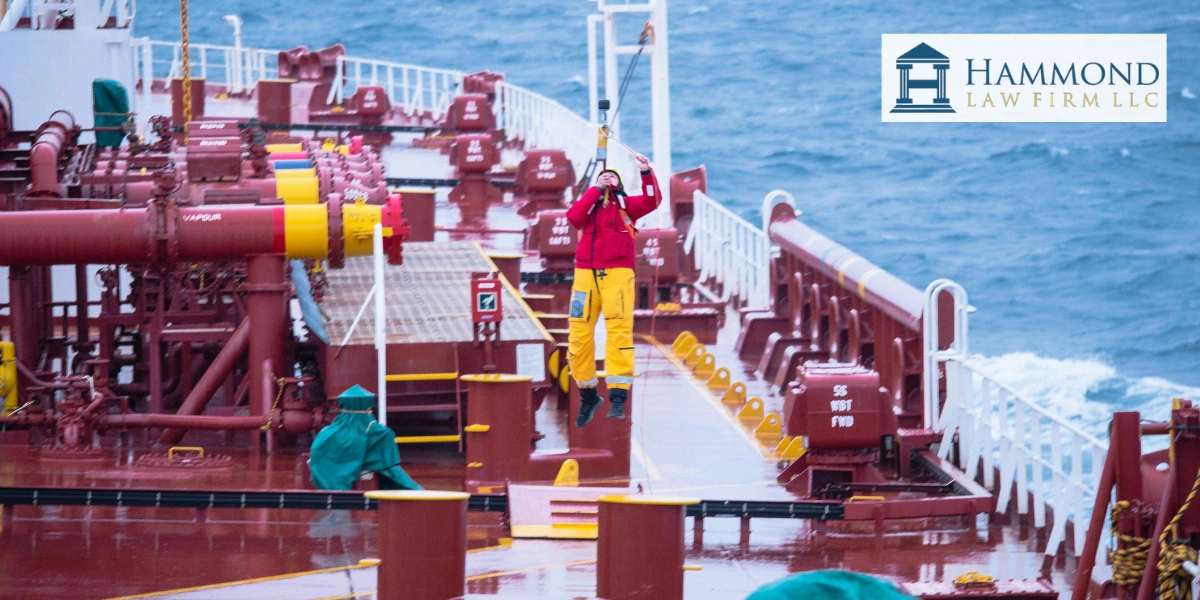
Maritime Attorney in New Orleans, LA
Thousands of vessels come and go from Louisiana’s many ports and harbors each year. When a seaman is injured while working on or near a navigable body of water, their rights and legal options may be determined by maritime law, which is why they need a New Orleans maritime lawyer. From commercial fishing and shipping to offshore drilling and cruise ships, the maritime industry encompasses various professions, each with its own hazards and potential legal issues.
Hire a Maritime Lawyer at Hammond Law Firm, LLC
If you or a loved one works in the maritime industry, you understand this line of work’s unique challenges and risks, including the challenges of recovering compensation. At Hammond Law Firm, LLC, we understand the complexities of maritime admiralty law and its impact on individuals working in sea jobs.
Our team of seasoned New Orleans personal injury lawyers is dedicated to strong legal representation and advocacy for maritime workers and their families. We are here to help you navigate the intricate legal landscape of admiralty law, safeguard your rights, and seek the compensation and justice you deserve.
Our New Orleans maritime lawyer has 35 years of experience and is extensively familiar with how to navigate cases within admiralty jurisdiction. At Hammond Law Firm, LLC, we regularly help seamen enforce their rights under the Jones Act and collect maintenance and cure benefits they are owed.
Our team also assists with claims involving offshore platform accidents and injuries. We understand the intricacies of maritime law and will leverage our knowledge and resources to pursue the optimal outcome in your case.
Do not wait to contact us online if you have been injured and need help enforcing your rights.
Our Practice Areas at Hammond Law Firm, LLC
The areas of maritime law we cover include:
- Jones Act Claims
- Maintenance and Cure
- Offshore Platform Accidents and Injuries
- Admiralty Personal Injury
- Wrongful Death
- Maritime Product Liability
Louisiana is the top state in waterborne commerce, making up 20% of the nation’s total maritime commerce. The New Orleans U.S. Customs District, which has offices located on Canal Street, is the top customs district in the nation for waterborne export trades. There are numerous employees in the maritime industry who can potentially be caught in maritime accidents or develop illnesses over time.
Contact Hammond Law Firm, LLC for experienced representation in maritime legal matters. We advocate justice, provide legal advice, and help pursue justice for the rights of maritime workers and their families, providing skilled advocacy and pursuing favorable outcomes.
Understanding The Jones Act
Unlike many other workers, seamen are not entitled to the same workers’ compensation benefits as other employees when they are injured on the job. Instead, injured seamen may be permitted to file a civil claim against their employers for negligence under the Jones Act.
The Act requires maritime employers to maintain reasonably safe working conditions. To recover damages as an injured seaman, you must prove that your employer failed to meet these obligations and that their negligence caused your injuries.
You may have a maritime injury claim under the Jones Act if your employer failed to:
- Maintain vessel equipment
- Provide sufficient and safe equipment to workers
- Adequately train workers
- Address unsafe work methods
- Regularly clean oil, grease, or slick surfaces
- Take reasonable steps to prevent a workplace assault
A maritime employer may fail to thoroughly inspect their vessel and consequently does not notice that a hatch’s hinges are deteriorating. After setting sail, a seaman passes through the hatch, which snaps off due to disrepair. The hatch falls to the ground and crushes the seaman’s foot in the process. Because a reasonable inspection and proper maintenance likely would have prevented this outcome, the seaman likely has a maritime injury claim under the Jones Act.
Unlike a traditional personal injury claim, an injured seaman is not required to demonstrate that their employer’s negligence was the primary cause of their injuries. They need only prove that their employer’s negligence contributed to the cause of their injuries. This substantially lower burden of proof often makes it much easier to hold employers accountable for unsafe conduct.
Suppose you are a seaman who has been injured while at work, you must initiate legal action within three years of the date the incident took place. Jones Act claims can be filed in state or federal courts.
Successful legal action under the Jones Act can entitle you to compensation for lost wages, medical expenses, reductions in earning capacity, physical and emotional pain and suffering, and more.
Our New Orleans maritime lawyer knows how to approach these cases and will seek the full and fair compensation available to you.
What Is Maintenance and Cure In Maritime Law?
The Jones Act also requires employers to provide “maintenance and cure” benefits to seamen while they recover from work-related injuries. Unfortunately, many maritime employers attempt to shortchange their injured employees or refuse to pay them anything at all.
- “Maintenance” refers to room and board. Because a vessel generally provides food and lodging to working seamen as part of their compensation, employers are legally required to cover these expenses when a seaman is recovering from a work-related injury. Therefore, maintenance benefits cover housing costs (rent or mortgage), essential utilities, food, homeowner’s insurance, and property taxes. Employers generally do not have to reimburse an injured seaman for car payments, automobile insurance, gas, internet, telephone, or cable bills.
- “Cure” benefits cover most medical expenses. This includes the cost of transportation to and from any necessary medical treatments.
An injured seaman is entitled to maintenance and cure benefits until they reach what their doctor believes to be their point of “maximum medical improvement” (MMI). In other words, an injured seaman must continue to receive benefits until it is determined they are not likely to get any better. This does not necessarily mean an injured seaman must make a full recovery.
Disbursement of these benefits is not optional and is required by law. If your employer is failing to honor your rights and provide you with the compensation you need to recover, an admiralty attorney from our team can help.
Other Kinds of Compensation in a Maritime Accident Claim
The kind of compensation you can recover in a maritime accident claim depends on the laws that govern your type of work. For example, the Longshore and Harbor Workers’ Compensation Act (LHWCA) outlines benefits like:
- Disability benefits. You can get temporary partial, permanent partial, temporary total, and permanent total disability benefits that compensate you for a portion of your average weekly wage at the time of your injury. There is a minimum and maximum rate. These benefits can help you address a loss of earning capacity in your future if you are permanently impaired.
- Medical treatment. A claim under the LHWCA recovers reasonable and needed medical treatment costs, including medical supplies and services. You have to get authorization from your employer before getting any non-emergency treatment.
- Mileage and transportation. You can recover reasonable costs for mileage, parking, tolls, and other costs needed to get yourself to a medical appointment. Mileage rates are reimbursed based on the U.S. General Services Administration rates.
- Vocational rehabilitation. These are for employees who are permanently disabled to help them secure gainful employment with similar pay to their pay at the time of injury. A claim can cover the cost of skills testing, employment counseling, job placement help, modifications to a prior job, and some training.
There are also wrongful death damages available when a maritime accident results in a death. This includes cases where a work injury contributes to someone’s death or hastens it. Death benefits are a portion of wages available to certain surviving family members, such as a spouse, children, or other dependents.
Guarding Yourself Against Occupational Risks in Offshore Platform Accidents
The Louisiana coast hosts dozens of offshore rigs and platforms. These facilities are known to be extremely dangerous and represent a high level of occupational risk by default. Fires, explosions, mechanical issues, and failure to appropriately handle heavy equipment can all result in serious injuries and even death. Some common hazards include:
- Slips and falls. It’s easy for workers to lose their footing on the steel decks of rigs, which can lead to severe trauma like broken bones, head injuries, or even spinal cord damage. Since offshore platforms are mostly located in very remote areas, it’s hard to get immediate medical assistance, which can make injuries even worse.
- Falling debris. With so much heavy equipment and materials, workers are always at risk of being struck by falling debris. This includes tools, machinery, and even parts of the platform itself. Even small items can become dangerous objects when they’re not properly secured or handled, and these accidents can lead to devastating head injuries, fractures, and internal damage. The high winds and movement of the platform itself only increase the risk of falling objects, which makes safety procedures even more important.
- Fires and explosions. These accidents can happen for many reasons, including faulty equipment, electrical malfunctions, or the mishandling of flammable materials. Offshore platforms store a range of combustible substances, like oil, gas, and chemicals, that are highly flammable and can easily catch fire. This can worsen an existing fire or explosion, potentially causing extensive damage to the rig, while also putting workers’ lives in danger. Even if workers survive, they can suffer severe burns and respiratory damage, and there is the potential for life-changing injuries.
- Mechanical malfunctions. Workers are also at risk for mechanical accidents that involve machinery and equipment found on the rigs. The heavy-duty machines used to drill for oil and gas are vital to the platform’s operation, but they’re also prone to malfunction. This means that if a machine breaks down or is improperly maintained, it can cause injuries that range from minor bruises to severe crushing. Workers need to be highly trained to minimize any risks, but accidents can still happen.
- Weather. Louisiana’s coastal waters can be hit by sudden storms, high winds, and rough seas, all of which create dangerous conditions on offshore platforms. Workers might be required to continue their tasks in these bad weather conditions, which can increase the likelihood of accidents. In extreme cases, severe storms can even lead to platform evacuations, which puts workers at risk when they try to leave the platform or board evacuation vessels. These evacuations, when poorly planned or executed, can even cause further injury or loss of life.
- Mental health. The psychological strain of working in such a high-risk environment should not be underestimated. Workers on offshore platforms are far from home for extended periods of time. This isolation, combined with the stressful conditions, can lead to mental health issues like anxiety, depression, and fatigue.
These conditions can impair decision-making abilities and increase the likelihood of accidents, which is why proper mental health support and adequate rest are very important when trying to maintain safety on these platforms.
If you have been injured while working on an offshore platform, it is important to contact an experienced New Orleans maritime attorney who can guide you through the process of holding those responsible accountable and pursuing the compensation you deserve.
The Outer Continental Shelf Lands Act specifically covers oil rig and platform workers. This law potentially entitles workers to compensation if they experience work-related injuries. Dependents of oil rig and platform workers may also be able to recover compensation if their loved one is killed in a workplace accident.
What Should You Do After a Maritime Injury in New Orleans?
If you’ve been injured in a maritime accident in New Orleans, there are several steps you should take to better safeguard your rights, your physical well-being, and your ability to file a claim. This includes:
- Reporting the injury. If you are able to, you should first report the accident and injury to your manager or supervisor before leaving.
- Getting medical care. You should immediately get medical treatment for your injury, regardless of how serious you think the injury is. When an injury is serious, treatment can make a significant difference in your recovery. Getting medical care also provides documentation of the injury and when it occurred.
- Documenting the incident. If you can, prior to leaving the scene, take photos and videos of what caused your injury and the injury itself. Take note of employees or other witnesses to the accident, getting contact information if necessary.
- Holding onto information. Keep your photos and videos of the incident, and secure other documentation like incident reports, your income information, communication with your employer, ship logs, and medical documentation.
- Limiting communication. If your employer’s workers’ compensation insurance company reaches out, avoid giving a statement or agreeing to anything. Avoid posting online about the incident or claiming any party is at fault.
- Reaching out to an attorney. When you hire a maritime lawyer, they can help you take the next steps to defend your rights.
In Louisiana, fatal workplace injuries in 2024 included 16 deaths in construction and extraction work, three deaths in farming, fishing, and forestry occupations, and 34 in material moving and transportation. Many of these industries overlap with maritime occupations.
Why You Need a Skilled Maritime Accident Attorney
At Hammond Law Firm, LLC, we do not give up when advocating for your rights.
When you are injured in a maritime accident, you deserve to recover the full amount of what you are owed. You will often need this compensation to provide for your family and cover exorbitant medical bills.
Our New Orleans maritime lawyers recognize what is at stake. We are prepared to take on complex cases and will take every step necessary to advance your claim and deliver a favorable resolution.
Schedule a free initial consultation to learn more about how our admiralty attorneys can help you recover what you are owed under admiralty law.
How Is Fault Established in Maritime Admiralty Cases?
In admiralty law, establishing fault and liability involves key factors under Louisiana law:
- Duty of care. Duty of care must be shown to prove fault, as well as a breach of duty resulting in injury or damage.
- Vessel owner’s duties. Vessel owners have duties to crew and passengers, including providing a seaworthy vessel and maintaining a safe environment.
- Seaman’s rights. Seamen have rights under the Jones Act and maritime law, entitling them to compensation for injuries caused by negligence.
- Proximate cause. Proving direct causation between the defendant’s negligence and the injuries or damages suffered.
Louisiana’s specific maritime laws impact fault determination and liability establishment. A skilled maritime attorney protects your rights and pursues full compensation by examining evidence, assessing negligence, evaluating duties, and establishing the proximate cause.
Consulting an experienced admiralty attorney well-versed in Louisiana maritime law is crucial.
Complexities in Maritime Admiralty Law That Require Legal Assistance
Admiralty law in Louisiana involves various legal complexities and nuances that require careful consideration. Some key complexities and nuances include:
Jurisdictional Issues
Admiralty cases often involve determining the appropriate jurisdiction for the claim. Determining whether a case falls under federal admiralty jurisdiction or state law jurisdiction can be complex. It may impact the applicable legal standards and remedies available for your case.
Choice of Law
Admiralty law involves a choice of law analysis, where the court determines which jurisdiction’s laws apply to the case. This analysis considers factors such as the incident’s location, the parties’ nationality, and the applicable maritime conventions or treaties.
Federal Statutes and Regulations
Marine admiralty law in Louisiana is governed by various federal statutes and regulations, including the Jones Act, the LHWCA, the Death on the High Seas Act (DOHSA), and others. Understanding and applying these laws correctly is crucial for pursuing a successful admiralty claim.
Unique Maritime Terminology and Customs
Admiralty law has its own distinct terminology, customs, and practices that may differ from other areas of law. Familiarity with these unique aspects is essential for effectively handling admiralty cases and properly interpreting and applying the law.
Limitation of Liability Actions
Shipowners and maritime employers may seek to limit their liability under certain circumstances. Limitations of liability actions can be complex and involve filing a petition in federal court. Navigating these actions requires thoroughly understanding the procedures and legal standards involved.
International Maritime Law Considerations
Admiralty law in Louisiana often involves international aspects, such as maritime commerce, shipping contracts, and collisions between vessels from different countries. Understanding international maritime law principles and conventions is necessary when dealing with these complex cases.
Navigating these legal complexities and nuances in admiralty law requires the legal purview of experienced New Orleans maritime attorneys. Contact us today for a free consultation and case review so we can further secure your benefits.
FAQs
What Types of Cases Fall Under Admiralty Law?
Admiralty law covers a wide range of cases, including personal injury claims, wrongful death claims, maritime accidents, vessel collisions, cargo disputes, maritime liens, salvage claims, and other legal issues arising in navigable waters. You need a knowledgeable attorney with experience in these complex issues to help if you have been injured in the maritime industry.
What Laws Apply to Maritime Cases in Louisiana?
A combination of laws governs maritime cases in Louisiana, including federal laws, international treaties, and state laws. Important federal statutes include the Jones Act, Longshore and Harbor Workers’ Compensation Act (LHWCA), Death on the High Seas Act (DOHSA), and general maritime law. Different maritime incidents are handled under different jurisdictions.
What Is the Prescription Period for Filing an Admiralty Maritime Claim in Louisiana?
The statute of limitations on claims, which is called a prescription period in Louisiana, can differ based on the specific circumstances and the type of claim. If you miss the deadline, you will likely be unable to recover any financial compensation. It is essential to consult with a maritime lawyer promptly to comply with the applicable time limits.
Why Do You Need Our New Orleans Maritime Lawyers for A Successful Claim?
There are many reasons you need our New Orleans maritime lawyers for a successful claim. Maritime laws, such as the Jones Act, General Maritime Law, DOHSA, and LHWCA, can be intricate and subject to interpretation.
The nuances and intricacies of these laws require a seasoned maritime lawyer who understands the local legal landscape and has extensive experience handling maritime cases in Louisiana. That’s where our dedicated team at Hammond Law Firm, LLC can help.
We Can Protect Your Rights: Contact Our New Orleans Maritime Lawyers Today
As a prominent personal injury and maritime law firm in New Orleans, our admiralty attorneys deeply understand the local maritime community and the unique aspects of maritime law in Louisiana. We take a particular approach to each case, working closely with our clients to gather evidence, assess damages, and develop a robust legal strategy tailored to their specific circumstances.
Don’t deal with complex maritime law alone. Put your trust in the skilled New Orleans maritime lawyers at Hammond Law Firm, LLC.
Schedule a consultation today to discuss your case and learn how we can protect your rights and pursue the compensation you deserve.
Client Testimonials

“Exceptional service from start to finish. The attorneys were knowledgeable, responsive, and fought hard on my behalf. Their efforts led to positive outcome. Highly recommended!” – Al B.
“Hammond law firm is one of the best firms in the country! I’ve been represented twice, and all the staff members are great to work with. They take the time to make sure you fully understand your case. Thanks Hammond Law. My firm for life!!!! Hammond Law does it all, just one call!” – Ron King
“I would like to thank Mr. Hammond and his team. When I would have a question or a concern they would be prompt with a response. They did everything to make sure that I received the best outcome possible, and I highly recommend them.” – Denny Henderson
Read more of our Google reviews.
Hammond Law Firm, LLC – New Orleans Office
650 Poydras St., Ste. 2617
New Orleans, LA 70130

Copyright © 2026 Hammond Law Firm, LLC - All rights reserved. Disclaimer | Site Map | Privacy Policy